



Project Lead
Jesus Lombardi
Luis Gonzalez Mazzei
Hans Ratmiroff
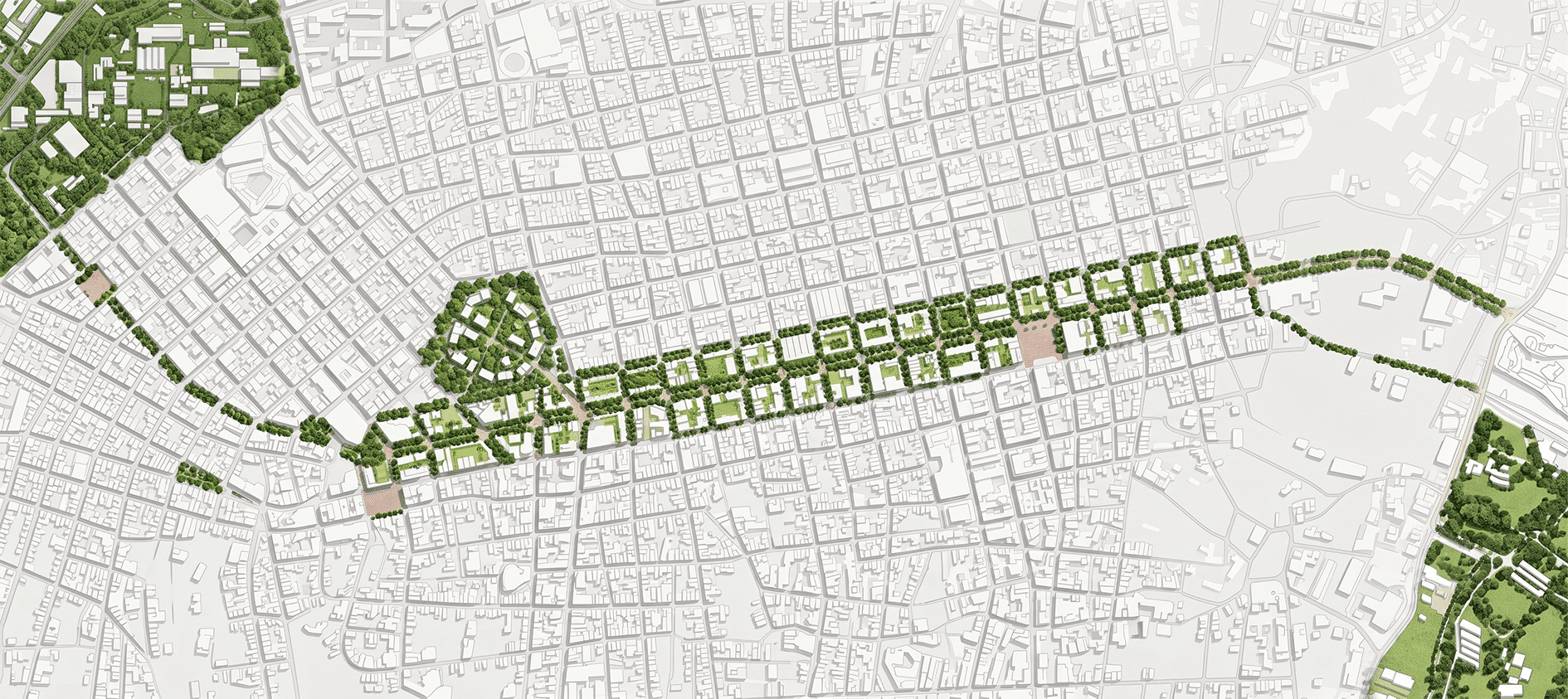
Master Revitalization Plan: 5 de Julio Commercial District
Studio Vision
We conceive urban regeneration not merely as a physical intervention, but as a social and economic reactivation. This project seeks to reverse the deterioration of Maracaibo’s most emblematic commercial axis, transforming it into a dynamic, safe, and pedestrian-oriented district under the concept of an “open-air shopping center.”
Context and Problem Statement
During the 1970s and 80s, 5 de Julio Boulevard consolidated itself as the city’s most important commercial and cultural artery. However, macroeconomic factors and an increased perception of insecurity altered citizens’ consumption patterns, leading to a migration towards enclosed shopping malls. This caused the abandonment of the street, the degradation of road infrastructure, and the disconnection of public space.
Our proposal stems from an innovative legislative framework that grants the area the status of a Commercial District, encompassing two blocks north and south of the main axis, allowing for comprehensive management of the urban transformation.
Strategic Axes of Intervention
To restore the Boulevard’s vitality, the master plan is articulated around the following design and zoning axes:
Sustainable Mobility and Road Redesign: Transformation of 5 de Julio Avenue (originally two-way) into a one-way artery. This geometric decision frees up critical space for the expansion of pedestrian walkways, the incorporation of a bicycle lane network, and the creation of an exclusive transit lane (BRT) for public transportation. The return vehicular flow is absorbed by a system of one-way pairs on parallel streets (such as Doctor Portillo Ave.).
Landscape and Environmental Renewal: Development of an urban reforestation plan using native species to mitigate the urban heat island effect and improve pedestrian comfort, complemented by the installation of contemporary urban furniture and an energy-efficient lighting system.
Comprehensive Waste Management: Implementation of a smart waste collection and recycling model, designed in partnership with local environmental entities to promote the district’s sustainability.
Commercial Reactivation (Zone 3): Enhancement of the city’s “Gourmet Zone.” The project includes the creation of a community brand identity, specialized signage, and the cohesion of gastronomic merchants to strengthen the local economic ecosystem.
Anchor Projects and Civic Architecture
The master plan goes beyond street design and incorporates high-impact architectural interventions to anchor civic activity:
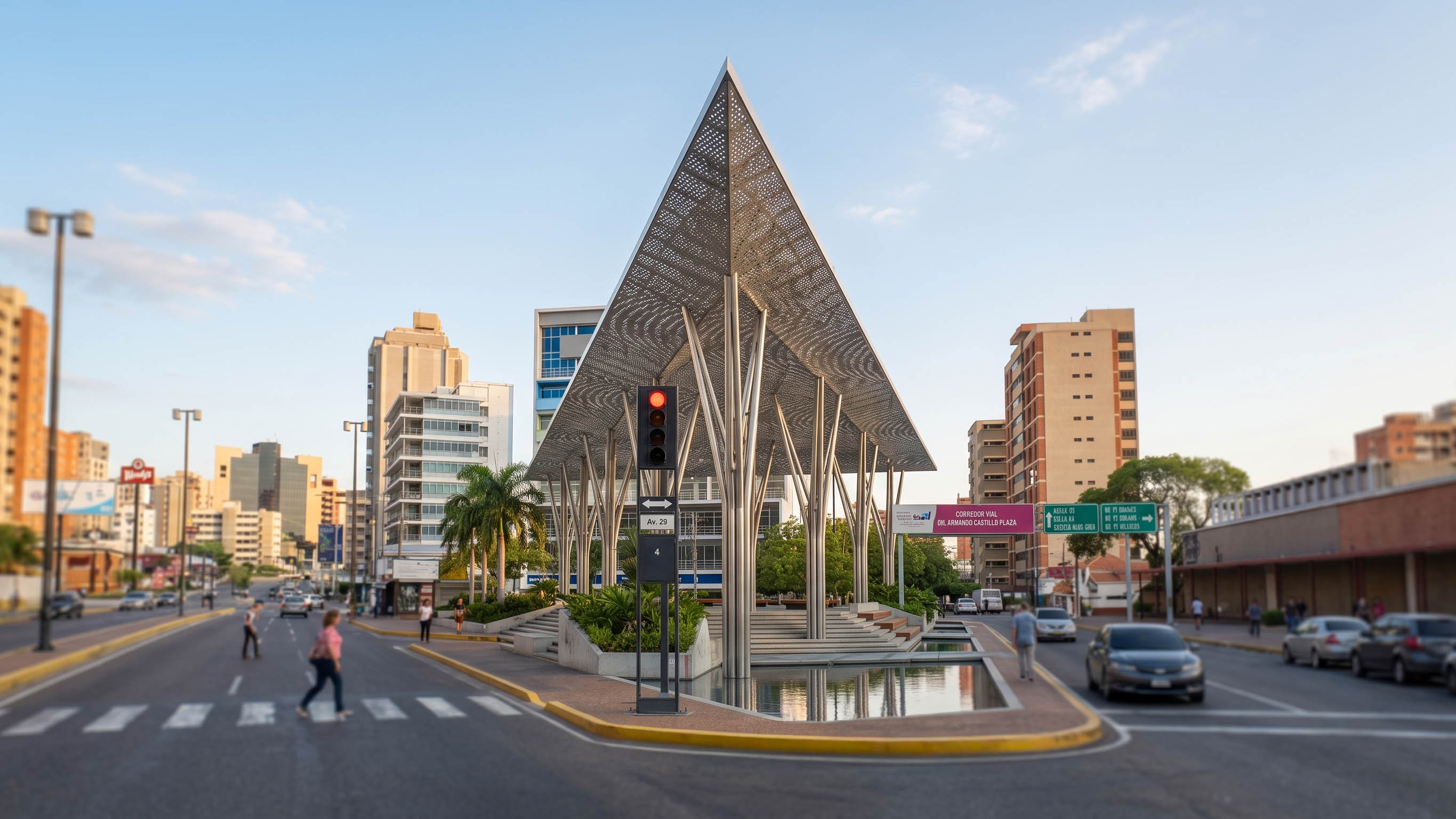
“Plaza Fomento” Civic Complex A strategic intervention on a residual plot (a road bifurcation) with no defined use. The design proposes a hybrid, underground building that addresses multiple urban needs:
Ground Floor (Street Level): A roofed, tree-lined public square with free pedestrian access.
First Basement: A cultural center featuring a public library, an amphitheater (connected to the plaza via integrated bleachers), and the headquarters of the Urban Monitoring Center.
Second Basement: A high-capacity public parking garage to mitigate the demand for surface parking.
“Derriba la Cerca” (Tear Down the Fence) Program An urban acupuncture project designed to reverse the “architecture of fear.” Through economic and security incentives, we promote the demolition of blind walls and security fences on private properties, encouraging active facades that interact directly with the public space.
Integrated Management and Security Model
Understanding that physical design must be accompanied by solid management, the project includes a plan for operational self-sufficiency. A regulated parking system (parking meters) was designed to be operated by formalized and trained local caretakers.
Furthermore, a Community Security system was structured, replacing the isolated private security of each business with a unified surveillance body. This team operates with a focus on public space (deploying one unit per block), maintaining direct communication with the Urban Monitoring Center and municipal police forces, thus guaranteeing a safe environment for the resurgence of open-air commercial life.
[Other works
S.2]

